Eyes on the future: how Australians are protecting their sight and hearing | Future Labs: The Future Looks Bright
If you’re concerned about the rise of short-sightedness in Aussie kids, cautious about the impact of Australia’s harsh climate on eyes, curious about the provision of culturally safe eye care in diverse communities, or need inspiration for how to best navigate health in middle age, a new podcast, The Future Looks Bright, has the answers you’re looking for.
Limiting screen time for kids’ eye health
In Sydney’s inner west, Jules and Iain Tallis are grappling with how to best manage screen time for their two boys, McCartney (8) and Charlie (6).
“When we had McCartney and just had the one child, we definitely popped on the screen, like he would do ABC Kids in the afternoons,” Jules says. “When Charlie came along, we just realised it was really tricky to get them both away from screens.”
Dr Joe Paul, an optometrist and the head of professional services for Specsavers in Australia and New Zealand, says it’s important that parents keep an eye on the amount of time kids spend looking at screens.
“Research found that Australian kids between five and 12 years old are spending, on average, three and a half hours a day on screens,” Paul says. The Australian government department of health and aged care recommends no more than two hours of sedentary recreational screen time. Many kids are spending an hour a day at school and a bit over two and a half hours at home, which, Paul notes, is quite a bit more than the recommendation.
He says over the past 10 to 15 years there has been a significant increase in the number of children needing glasses and other interventions due to myopia, or short-sightedness. This is understood to be linked to indoor, near tasks, such as using digital devices.
To address changes in kids’ eyes as early as possible, Specsavers runs a children’s vision screening program, in which local optometrists visit primary schools and run free screenings to detect any signs of eye conditions.
“It can be quite hard to tell if kids are having problems with their vision,” Paul says. “If children are squinting or rubbing their eyes a lot or complaining of headaches, these can be signs they’re having eye problems.”
His advice? Get outside more. “We sometimes use the phrase, ‘screen time versus green time’. It’s really about getting a balance between time spent on screens … and time spent outdoors. This is the best thing you can do for kids to stop them from progressing in myopia.”
In the Tallis household, Iain says screen time is now allowed only at the weekends at their home, although he adds: “I would never judge another family for their amount of screen time. Every family is different and every routine is different.”
While Paul advocates for us all to get outside and away from our screens, in Australia the strength of the sun also requires careful management when it comes to eye care.
Getting outside is great, but stay protected
Mark Lucey, an optometry lecturer at the University of Western Australia, says UV radiation from the sun can affect our eyes in numerous ways, including causing photokeratitis, effectively sunburn of the eyes.
Maddy Crowe, a Specsavers optometrist in the New South Wales Central Coast suburb of Erina, says she notices lots of signs of sun damage in younger people. Both experts say it’s important to wear proper eyewear such as UV-protective sunglasses when you’re outdoors.
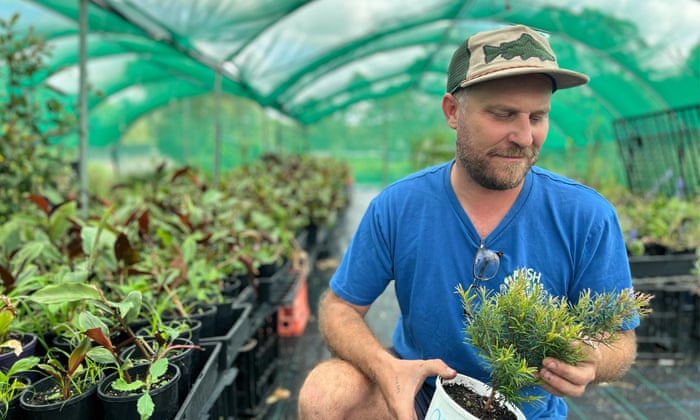
Garigal/Gadigal man Adam Byrne works outside all day in Australia’s harsh conditions as an educator and landscape gardener. While he has long been conscious of the need to apply suncream and wear a hat for protection, he used to be less aware of the importance of sun safety for his eyes. This only became a priority for him when his vision started deteriorating.
“I’ve had to get reading glasses,” he says. “I [also] wear sunglasses, but I lose a lot of sunglasses as well.”
At 43, Byrne takes his eyesight and hearing a lot more seriously than he used to.
“It’s just something I’ve got to be conscious of. I’ve always been around loud, industrial noise or loud music. I’m just conscious of my ears, eyes, skin and my general health.”
Maintaining good vision and hearing as we age
About 3.6 million Australians have some level of hearing loss, says the Department of Health and Aged Care. One of the biggest causes is exposure to noise. Dug, 44, has started to notice changes in his hearing and eyesight after years playing in bands and watching live music. He remembers his ears ringing for a week after attending a particularly loud gig in Sydney.
Kathryn Launchbury, a senior audiologist at Specsavers, which offers hearing checks, diagnostic assessments and hearing aid devices as well as optometry services, says: “Hearing loss affects a wide range of people. A lot of people think that hearing loss is just associated with ageing.
“There are other factors as well. It might be genetic factors; it might be due to disease. It can also be from noise exposure, whether that’s work-related or recreational activities, it can start damaging your hearing from a much earlier age than a lot of people expect.”
To protect your ears from noise-related hearing loss, Launchbury recommends wearing earplugs when you’re exposed to loud noise, such as when mowing the lawn or listening to live music. “If you’re going out to a concert, make sure you are wearing earplugs [and] stand away from the speaker,” she says. “Also, if you’re going to be wearing earphones if you’re listening to music, a good rule of thumb is that if somebody else can hear … it means that music is too loud.”
With challenges from screen time to harmful UV rays and our bodies changing as we age, it’s clear that our eyesight and hearing should never be taken for granted. In The Future Looks Bright, we meet Australians who are learning to prioritise their eye care and hearing in innovative and accessible ways to ensure a bright, healthy future.
Listen now to The Future Looks Bright, available wherever you get your podcasts.
Find a local Specsavers near you.
link