


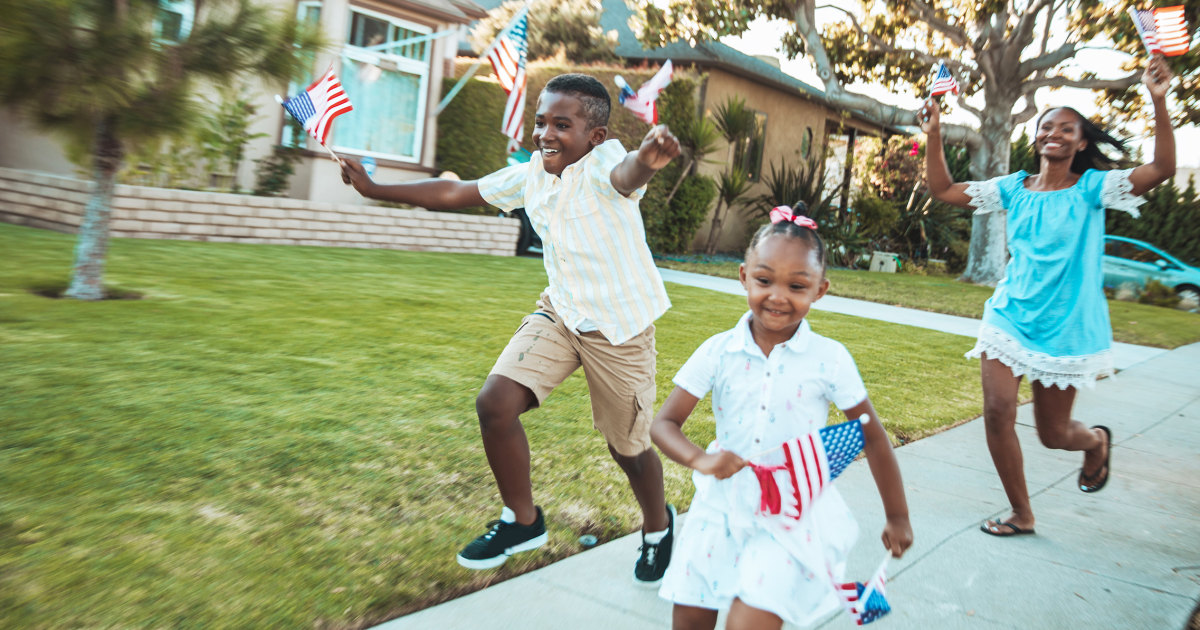
Fourth of July is a nostalgic summer holiday filled with outdoor fun for adults and children alike. Celebrations often involve gatherings with family, backyard barbecues, and plenty of red, white and blue.
Unfortunately, the Fourth of July is also a busy time of year for emergency rooms. Hospitals often prepare for a boom in visits due to injuries sustained on the holiday — from the usual cuts and breaks to grilling mishaps, drownings, heat-related illness and alcohol-related accidents.
Independence Day celebrations present unique health and safety risks, especially for kids. When it comes to Fourth of July, there’s one thing that pediatric ER doctors fear the most, and avoid entirely:
Letting Kids Play With Fireworks
Fireworks are a classic part of Fourth of July. The pyrotechnic displays are bright and thrilling, especially for children. However, kids and fireworks should never mix, experts caution.
“As a pediatric emergency medicine physician and parent to three small children, firework safety is paramount, and I would never let my own children play with or assist with fireworks,” Dr. Tyler Rainer, a pediatric emergency doctor at Children’s Hospital of Philadelphia, tells TODAY.com.
Fireworks are devices that produce a spectacle of light and color as a result of burning explosive or flammable materials. You light a fuse, which travels to the firework and causes gunpowder inside to explode, propelling it into the air which produces “stars” of light. Unsurprisingly, a lot can go wrong during this process.
Every summer, children wind up in the emergency room due to accidents with fireworks, which spike around the Fourth of July, Dr. Brent Kaziny, medical director of emergency management at Texas Children’s Hospital, previously told TODAY.com.
Burns are the most common fireworks-related injury, says Kaziny. These often affect the fingers, hands, head, and face, and can range from minor to third-degree.
Blast injuries from fireworks can cause open wounds, fractures, and even amputations, says Rainer. Accidents involving the eyes or ears can cause blindness or hearing loss.
Even watching fireworks can be risky, especially for young children and infants. “Fireworks can be incredibly loud the closer you are to them, which can result in noise damage,” Dr. Nick DeBlasio, director of Pediatric Primary Care at Cincinnati Children’s Hospital, tells TODAY.com.
“I would not (let my child use them). We see a lot of injuries from fireworks each year,” says DeBlasio.
Fireworks-related accidents are on the rise in the United States. According to the U.S. Consumer Product Safety Commission’s annual report on fireworks, there was a 38% increase in deaths and 52% increase injuries reported in 2024 compared to 2023.
Last year, at least 11 people died and 14,700 were injured due to fireworks, the CPSC.
“Fireworks can be a fun part of celebrating summer holidays, but it’s really not worth a devastating lifelong injury for your child,” Dr. Caitlin Farrell, a pediatric emergency medicine physician at Boston Children’s Hospital previously told TODAY.com.
Sparklers Are Not Safe, Either
Many injuries are related to home fireworks, which includes sparklers. Although sparklers are often thought of as a child-friendly novelty, they’re far from harmless.
“Parents need to recognize that sparklers can get up to temperatures of over 2,000 degrees Fahrenheit. It’s essentially a welding torch type of heat,” says Kaziny.
“Many people think that sparklers are safe, but we actually see a lot of burns from sparkers,” adds DeBlasio.
Children can suffer burns to the hands, legs and face from handling sparklers improperly, and rogue sparks can fly into eyes or ignite hair or clothing into flames. “We (do) see third-degree burns from sparklers,” DeBlasio adds.
In 2024, there were an estimated 1,700 injuries involving sparklers treated at emergency rooms in the U.S., according to the CPSC.
Home fireworks and sparklers also pose risks to pets.
Fireworks Safety Tips for Parents
Fortunately, parents and children can still enjoy fireworks this Fourth of July — but from a safe distance, says Rainer. Leave the pyrotechnics to professionals, and watch a public fireworks show instead.
“The best way for children to take part in the holiday fireworks is as spectators with appropriate adult supervision that is constant and engaged,“ says Rainer.
Always watch children closely around fireworks, especially near water. “Fireworks can be a dangerous distraction … so swim safety remains critical,” Rainer adds.
The experts, along with the National Safety Council, advise against setting off fireworks at home, even if they are legal.
Instead of sparklers, Kaziny recommends giving children safer alternatives, like glow sticks.
If parents still want to take the risk and set off fireworks, they should follow proper safety precautions and never allow children to handle, light or stand nearby fireworks. “Adults should not be under the influence of alcohol or other substances,” Rainer adds.
This patriotic holiday should be about making happy childhood memories, not making trips to the emergency room.
link